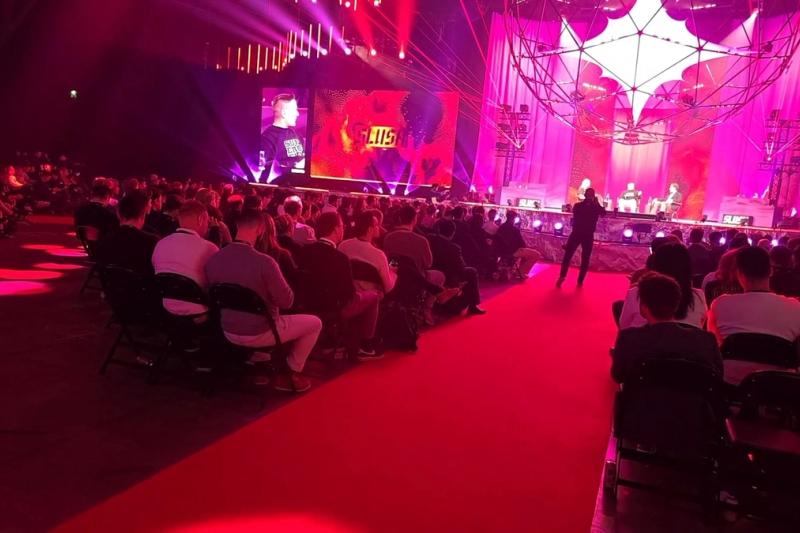
The Finnish startup ecosystem is a network of city startup services, university campuses such as Aalto's, accelerators, events such as Slush, and state bodies: Business Finland, Finnvera and Tesi. Helsinki, the Aalto campus in Espoo, Oulu, Turku and Jyväskylä each have official startup programmes, mapped in this guide.
Key takeaways
- The ecosystem is a set of separate organisations, not one system: city services, campuses, state funders and events each have their own official page.
- Business Finland's Tempo call will not reopen, according to its January 2026 article; its Sprint call page says Sprint becomes continuously open on 1 September 2026, so check the current state before applying.
- Finnvera does not finance a project alone and says the company's own contribution is 20-50 percent.
- Slush runs 18-19 Nov 2026 in Helsinki; Arctic15 is next on 16-17 Jun 2027.
- This map has gaps (Tampere, Lahti, Espoo's city page) that are listed at the end.
On this page
- What is the Finnish startup ecosystem made of?
- Where are the main startup hubs in Finland?
- What does the Helsinki startup scene offer?
- What happens on the Aalto campus in Espoo?
- Which public bodies fund Finnish startups?
- Which startup events matter, and when are they?
- Where do investors and the biggest startups fit in?
- How should a founder use this map?
- What does this map not cover?
The Finnish startup ecosystem is not one organisation. It is a set of city services, university campuses, accelerators, events, investors and state bodies, each with its own page and its own purpose. This guide maps them for a founder who is new to Finland, says what each is for, and links to its own site.
We read every page on 7 Oct 2026 unless a date is given. Where an organisation describes itself in superlatives, we attribute the claim to it. Where we could not read an official page, we say so instead of filling the gap from memory.
What is the Finnish startup ecosystem made of?
Four kinds of organisation do most of the work that a new founder meets.
- City and regional bodies run startup advice and local programmes, for example in Helsinki, Oulu, Turku and Jyväskylä.
- Universities and campuses host incubators, pre-incubators and shared spaces.
- State funders (Business Finland, Finnvera and Tesi) provide grants, loans, guarantees and investment capital.
- Events such as Slush and Arctic15 bring founders and investors into one room.
Before any of them can help, you need a legal entity. Our guide to starting a business in Finland covers the steps, and the comparison of a toiminimi (private trader) and an Oy (limited company) covers the first choice.
Where are the main startup hubs in Finland?
The table covers five hubs for which we could read an official startup page. Each cell links to the page that contains its claim. An empty cell means no page we could read confirmed an item, not that none exists.
The three smaller hubs in the table are worth a closer look because they are run by different kinds of body. BusinessOulu says there are approximately 120 active startup companies in Oulu; the page does not date the figure.11 Business Turku's article says the region aims to grow its startup count from the current 110 to 250 by the end of the decade.12 In Jyväskylä, the University of Jyväskylä says that from autumn 2026 Idea to Business coaching, Business Coaching and Product Development Funding move back to JAMK.13 If you plan around Jyväskylä's incubator, read that article first.

What does the Helsinki startup scene offer?
The City of Helsinki's startup services page is a useful starting point. It links to Maria 01, the Campus Incubators programme, Health Incubator Helsinki, which it describes as an incubator for health sector startups, and Sisu Factory, a soft-landing service for bringing a business to Finland.7 It also links to the Helsinki Dealroom database, which the page says lists more than 2,000 startups and growth companies.7 The page shows no update date, only a 2026 copyright line.
The page describes Maria 01 as the largest startup cluster in the Nordic countries.7 That is the City's wording. Maria 01's own website could not be read when we checked, so this guide gives no founding date, ownership or member numbers for it. The Campus Incubators programme, in the City's words, aims to increase the number of start-ups, support RDI-based entrepreneurship and improve the growth potential of the resulting companies. For 2025-2027 it runs with Aalto University, the University of Helsinki and Metropolia University of Applied Sciences.8 If you need a desk rather than a programme, see our guide to coworking spaces in Helsinki.
What happens on the Aalto campus in Espoo?
Aalto Startup Center calls itself "the home of innovation". Its programme menu lists five programmes: the Business Generator Accelerator Program, ESA BIC Finland, Aalto Creatives, the R2B Pre-Business Incubator and ESA Phi-Lab Finland.9 Aalto Startup Center gives its address as A Grid, which calls itself "the hub for future unicorns located in the heart of Aalto University campus". It states 150+ member companies and over 25,000 sqm of office space.10 Its 100STARTUPS networking series began on 26 Aug and builds to a main event on 21-22 Oct 2026.10 For how these programmes compare with others, see our guide to startup accelerators in Finland.
Which public bodies fund Finnish startups?
Business Finland's funding update of 21 Jan 2026 says the previously closed Tempo funding call will not be reopened. It names Sprint as a funding call for small companies that have a new innovation, which Business Finland said it would launch during early 2026.1 Business Finland's separate Sprint call page, last stamped 23 Feb 2026, says the fixed-term call ran from 2 March to 31 August 2026 and that Sprint becomes continuously open for applications on 1 September 2026. We could not confirm from that page that it is open today.14 The January article also says NIY funding for the growth and internationalisation of startups will most likely remain closed, and that news on Deep Tech Accelerator calls will come later.1 That article is dated before the date of this guide, so check Business Finland's funding pages for the current state of each call.
Finnvera's startup financing page says Finnvera can finance a startup with loans and guarantees that complement bank financing and investor capital, and that it never finances a project alone. It states that the company's own contribution is 20-50 percent of the project, depending on the financing structure.2 It does not finance the idea stage alone, and it lists products including the Start Guarantee, the Entrepreneur Loan and the Digitalisation and Innovation Loan.2
Tesi (Finnish Industry Investment Ltd) describes itself on its about page as a state-owned investment company. It says it invests on market terms in venture capital and private equity funds, and directly in startups, scale-ups and large industrial projects.3 Its key figures for H1/2026 are EUR 3.9 billion in investments under management and EUR 131 million in investments made and commitments given.3 Private funds that Tesi backs are covered in our guide to venture capital in Finland.
For the grant routes in detail, see our guides to the startup grant in Finland and to startup funding more broadly.
Which startup events matter, and when are they?
Slush's own site shows Slush 2026 in Helsinki on 18-19 Nov. It calls Slush "the planet's most founder-focused event" and the "largest venture capital gathering"; both are its own claims.5 On 7 Oct 2026 it showed a Startup ticket at EUR 395 and an Investor ticket at EUR 1,195, both including 13.5% VAT, with solo general partners and angel investors getting a EUR 100 discount on the Investor ticket. Prices can change.5
Slush's about page says Slush is owned by the Startup Foundation, a Finnish not-for-profit working toward strengthening the local startup ecosystem, so the event and the foundation are two entities.4 The same page says Slush was founded in 2008 as a 250-person gathering and is still organised by students and recent graduates.4 For planning the week, read our Slush Helsinki guide and the list of Slush side events.
Arctic15 calls itself a meeting spot for startup entrepreneurs, investors, corporates and media from 60+ countries. Its page gives the next event as 16-17 Jun 2027 in Helsinki.6 Other dates, including A Grid's 100STARTUPS above, are in our list of startup events in Finland. We found no confirmed 2026 or 2027 event dates for Oulu or Tampere on official pages.

Where do investors and the biggest startups fit in?
The hub pages we read name few private investors, so this map leaves them to dedicated guides. Our venture capital guide covers who funds Finnish startups, the unicorns article covers the largest companies that came out of the ecosystem, and the accelerator comparison covers programmes in more depth than a map can.
How should a founder use this map?
Match the organisation to your stage, and check the date on each page before you rely on it.
- At the idea stage, look at the city and campus programmes. BusinessOulu describes Startup Express as a 100-day route from idea to startup entrepreneur, and Aalto Startup Center's menu lists an R2B Pre-Business Incubator. Finnvera, by its own page, does not finance the idea stage alone.
- With early customers, read Finnvera's startup page and Business Finland's funding news side by side, because they describe different kinds of money. Finnvera offers loans and guarantees. Business Finland's article describes innovation funding calls, several of which were closed at the time.
- Before an event, confirm dates and prices on the organiser's own page. Slush and Arctic15 both show their next dates there, and prices can change.
- If you are bringing a business to Finland, the City of Helsinki's page points to Sisu Factory, which it describes as a soft-landing service. Check what it covers on that page before you contact it.
None of these steps replaces reading the current terms. Programmes change, calls close, and several pages in this guide carry spring 2026 dates. We read every page on 7 Oct 2026, and our next review is due in January 2027.
What does this map not cover?
A map is only as good as the pages behind it. These parts are missing, and we preferred a gap to an unverified line.
- Tampere. Startup.Tampere and the Platform6 startup house were not confirmed from the organisation's own page, because both sites were unreachable on 7 Oct 2026. Tampere is left out of the table.
- Maria 01's own site could not be read, so only the City of Helsinki's description is used.
- Espoo's own startup page, Lahti, and a Jyväskylä city startup page were not found or not researched. The Espoo row rests on Aalto's pages.
- Dates for Junction 2026, and for events in Tampere, Oulu and Turku, were not confirmed.
- Investor networks and industry bodies are not profiled here. National ecosystem statistics are left out, because the organisations that publish them show different figures on different pages; the only counts quoted are those a hub or city page gives for itself.
If you can fill a gap with an official page, tell us. Founders who still need the legal basics should start with how to start a business in Finland.
Frequently asked questions
How do I get public funding for a startup in Finland?
Start with the official pages. Business Finland's January 2026 article says Tempo will not reopen and that a Sprint call for small companies with a new innovation would launch during early 2026; its Sprint call page says Sprint becomes continuously open on 1 September 2026. Finnvera offers loans and guarantees, says it never finances a project alone, and does not finance the idea stage alone.
When is Slush 2026 and what does a ticket cost?
Slush's own site shows Helsinki, 18-19 Nov 2026. On 7 Oct 2026 it listed a Startup ticket at EUR 395 and an Investor ticket at EUR 1,195, both including 13.5% VAT. Prices and availability can change, so check slush.org before you plan around them.
What is Maria 01?
The City of Helsinki's startup services page describes Maria 01 as the largest startup cluster in the Nordic countries. That is the City's wording, and it is the only description we use here. Maria 01's own website could not be read when we checked, so we give no founding date, owner or member count.
Are there startup programmes outside Helsinki?
Yes. BusinessOulu lists a 100-day pre-incubator, a nine-month AI incubator and a health-tech incubator. Business Turku founded the Turku Startup Hub network in 2026. Yritystehdas in Jyväskylä is an incubator owned by the City, JAMK and the University of Jyväskylä. The table above links to each page.
Is Business Finland's Tempo funding still available?
No. Business Finland's article of 21 Jan 2026 says the previously closed Tempo funding call will not be reopened. The same article says NIY funding for the growth and internationalisation of startups will most likely remain closed. Check the funding pages for anything that changed after that date.
Sources
- What do Business Finland's funding services look like at the beginning of 2026? (21 Jan 2026), Business Finland. Accessed 7 Oct 2026.
- Startup financing, Finnvera. Accessed 7 Oct 2026.
- About Tesi, Tesi (Finnish Industry Investment Ltd). Accessed 7 Oct 2026.
- About Slush, Slush. Accessed 7 Oct 2026.
- Slush 2026, Slush. Accessed 7 Oct 2026.
- ARCTIC15, Arctic15. Accessed 7 Oct 2026.
- Services for startups, City of Helsinki. Accessed 7 Oct 2026.
- Campus Incubators programme, City of Helsinki. Accessed 7 Oct 2026.
- Aalto Startup Center, Aalto University. Accessed 7 Oct 2026.
- A Grid, A Grid. Accessed 7 Oct 2026.
- Services for startups, BusinessOulu. Accessed 7 Oct 2026.
- Business Turku article on Turku Startup Hub and Axelia (16 Apr 2026), Business Turku. Accessed 7 Oct 2026.
- Yritystehdas and the higher education institutions in Jyväskylä are clarifying their services (7 Apr 2026), University of Jyväskylä. Accessed 7 Oct 2026.
- Sprint Grant for small companies seeking rapid international growth (call page, updated 23 Feb 2026), Business Finland. Accessed 7 Oct 2026.
Written by SiltaNova Editorial. AI tools produced a first draft, which was rewritten and edited. Editorial policy